



Introduction
Receiving any neurosurgical diagnosis is discomfiting but when that diagnosis has a strange name you might not have heard before it is particularly so.
Moyamoya is a Japanese word literally meaning “a puff of smoke” and it was coined by Suzuki and Takaku to describe the appearance of tiny blood vessels developing in the brain that attempted to compensate for the loss of blood flow from the internal carotid arteries.
What is Moyamoya Disease?
The condition was first described in the Japanese population in the 1950’s and is most often characterised by a progressive narrowing of both internal carotid arteries at the base of the brain leading eventually to their occlusion. This happens slowly allowing the body to generate these new collateral vessels to try and compensate.
While most often encountered in the people of East and South-East Asia as well as the Middle East it can complicate other medical conditions found in Western populations including Neurofibromatosis type 1, Sickle Cell Disease and Trisomy 21 (Down Syndrome). It can also complicate earlier treatment with radiotherapy. In my practice I have encountered rare case even after proton beam therapy to the skull base.
What Problems Might Moyamoya Cause?
The little Moyamoya blood vessels may not deliver enough blood flow and are inherently fragile and prone to bleeding. As a result Moyamoya Disease can result in bleeding strokes in the brain as well as strokes caused by a lack of oxygen (ischaemic stroke).
It may also case less dramatic symptoms in the form of headaches and fluctuating weakness or sensory change. To optimise management and assure diagnosis correctly the contributions of experienced neurologists and neuroradiologists is vital as a part of the multidisciplinary team.
How Is Moyamoya Diagnosed?
The effect of Moyamoya may be evident on CT and MRI studies of the brain. It will usually be required to carry out a digital subtraction angiogram which provides valuable information about high-risk characteristics in the blood vessels as well as assessing suitable donor blood vessels ahead of surgery.
In my practice at The Wellington Hospital, I evaluate the cerebrovascular reserve to determine how the existing Moyamoya vessels are performing in their effort to deliver blood to the brain. A very limited cerebrovascular reserve may identify those most likely to benefit in the long term from surgical revascularisation. It is done by administering a drug to increase blood flow to the brain and evaluating the effect on cerebral blood flow using CT, MR or SPECT imaging.
What Is The Treatment?
Surgery is not always required. Treatment with aspirin to reduce the risk of occlusive stroke is often recommended although, as is often the case with rare diseases, there is little high-quality evidence to demonstrate its benefits.
There is some evidence to support surgery to improve bloodflow to the brain. This is strongest at reducing the risks of further bleeding where such has occurred before. It may also reduce the lifetime risk of ischaemoc stroke and can relieve symptoms such as headache, brain fog (cognitive slowing) or focal neurological deficits if these are caused by low oxygen delivery.

In the management of Moyamoya disease, the objective of surgery is clear: to restore a reliable blood supply to a brain that is struggling for oxygen. However, the path to achieving that restoration is highly individualized. As a consultant neurosurgeon specialising in neurovascular disease, I often tell my patients at The Wellington Hospital that the "best" surgery is not a single technique, but a bespoke strategy tailored to their specific vascular anatomy.
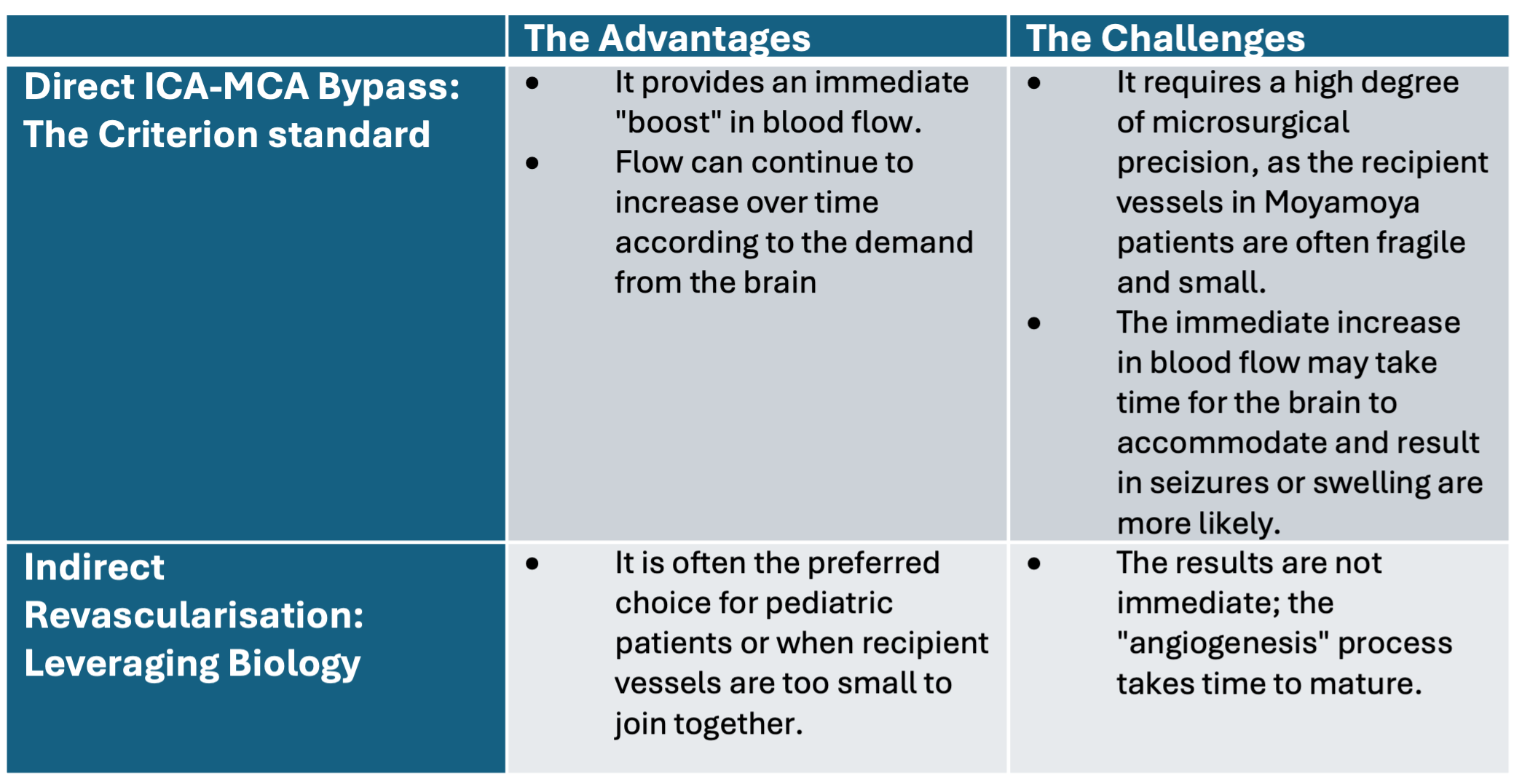
In my London practice, we often employ a Hybrid Approach. By combining a direct bypass with an indirect synangiosis using the dura covering the brain, the tissue around the donor artery or muscle from the scalp, we provide the patient with both an immediate increase in flow and a long-term "reserve" of new vessel growth. This dual strategy is particularly effective in complex cases of cerebral vasculopathy where the cerebrovascular reserve is significantly impaired.
Conclusion
Deciding on the right intervention requires a multidisciplinary approach, utilizing advanced imaging to map out the brain's existing blood flow. If you or a family member has been diagnosed with Moyamoya or a related vasculopathy, a specialist consultation is the first step toward a definitive treatment plan.